


Businesses today operate in increasingly interconnected supply chains. A product may be designed in one country, manufactured in another, assembled elsewhere, and delivered to customers across multiple markets.
This global connectivity creates significant opportunities. Businesses can access new suppliers, optimize costs, expand into new markets and build more efficient operating models. At the same time, however, greater interdependence can increase exposure to disruption.
A delay or disruption in one part of the world can quickly affect businesses elsewhere.
Geopolitical tensions, transportation delays, natural disasters, cyberattacks, and shortages of critical materials can all disrupt supply chains, sometimes with little warning. For organizations operating in complex markets, anticipating risks and responding quickly is becoming increasingly important.
Technology is playing an important role in helping businesses prepare.
Why Are Supply Chains Becoming More Difficult to Manage?
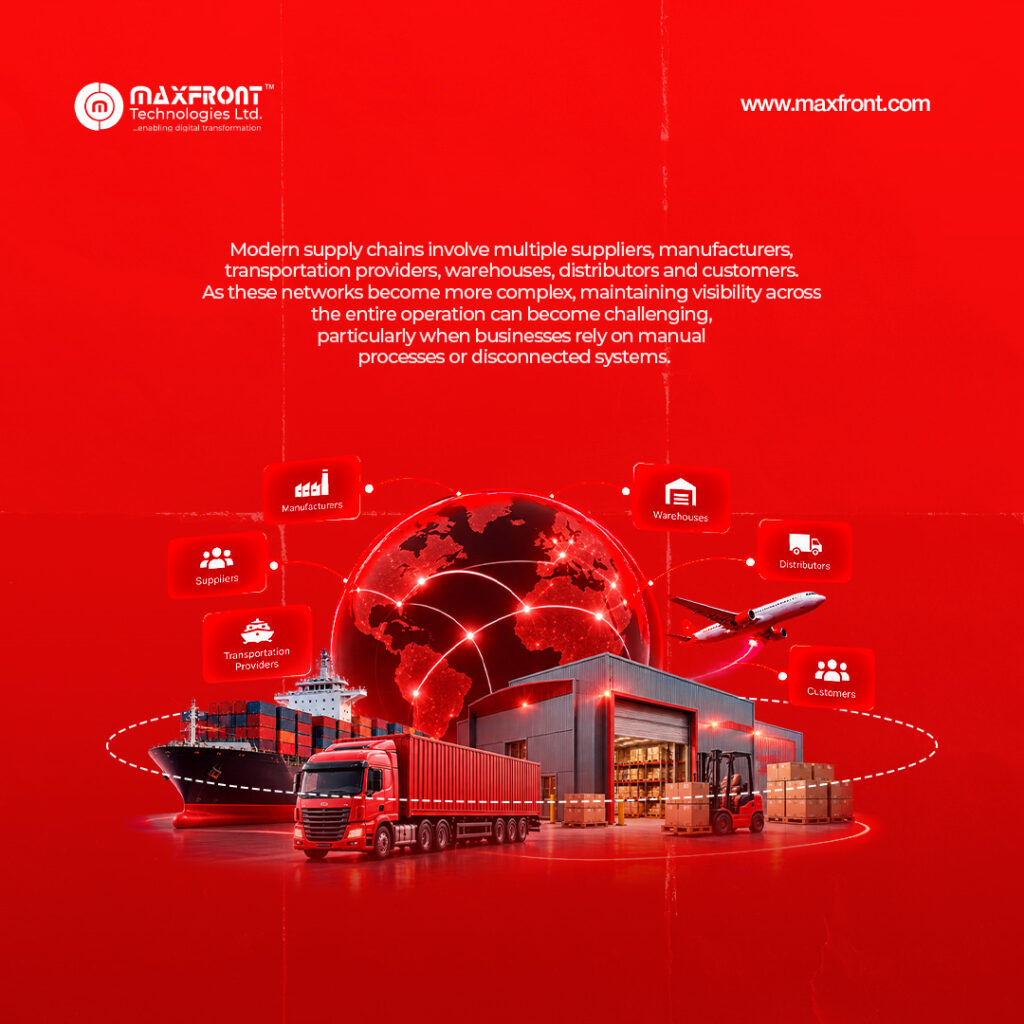
Modern supply chains involve multiple suppliers, manufacturers, transportation providers, warehouses, distributors, and customers. As these networks become more complex, maintaining visibility across the entire operation can become challenging, particularly when businesses rely on manual processes or disconnected systems.
Consider a delay from a key supplier. If that delay is not identified early, it could affect production schedules, inventory levels and ultimately customer deliveries. By the time the issue becomes visible, the business may have limited options to respond.
This highlights an important requirement for modern supply chains: businesses need to monitor operations, identify emerging risks, and act before disruptions escalate.
How Technology Can Improve Supply Chain Visibility
One of the most significant benefits of digital technology is improved visibility.
Cloud-based platforms, connected systems, and data analytics can bring information from different parts of the supply chain into a more integrated environment. This can give decision-makers a clearer view of what is happening across their operations and where potential issues may be developing.
Businesses can monitor areas such as:
- Inventory levels
- Supplier performance
- Order status
- Transportation and delivery
- Production activity
- Customer demand
With timely access to this information, organizations can identify trends and make decisions based on current operating conditions rather than relying solely on historical information or manual reports.
For example, if inventory levels are declining faster than expected, analytics can help identify the trend early. Procurement teams can then assess whether additional stock, alternative suppliers, or other contingency measures are required before the situation becomes a critical shortage.
AI and Predictive Analytics
Artificial intelligence can take supply chain management a step further by helping businesses identify patterns and anticipate potential risks.
AI-powered systems can analyze historical sales, inventory levels, supplier performance, market conditions, and other relevant data to support forecasting and decision-making.
Businesses can use these insights to estimate demand, identify potential shortages, optimize inventory levels and assess possible supply chain risks.
However, AI is not a substitute for effective processes or human judgement. The quality of an AI-driven recommendation depends significantly on the quality, availability, and relevance of the underlying data. Businesses also need appropriate human oversight to evaluate recommendations and respond to situations that may fall outside historical patterns.
The objective, therefore, should not simply be to deploy AI, but to use it where it can improve decision-making and provide meaningful business value.
Automation Can Improve Operational Efficiency
Automation can also reduce the amount of manual work involved in supply chain operations.
Routine activities such as order processing, inventory updates, notifications, and documentation can be automated. This can help reduce errors, improve consistency, and allow employees to focus on more complex operational and strategic decisions.
For example, an automated system could notify a procurement team when inventory falls below a predetermined threshold or alert a manager when a delivery is significantly delayed.
These early alerts provide valuable time to investigate the issue and take corrective action before a small problem becomes a larger operational disruption.
Why Integration Matters
Technology delivers greater value when systems can work together.
Connecting information from inventory, procurement, finance, logistics, suppliers, and customer orders can give organizations a more complete view of their operations. Rather than relying on isolated systems or spreadsheets, decision-makers can work from a more consistent set of information.
This integration can also support faster communication between teams. When a disruption occurs, the relevant people can access the information they need, understand its potential impact, and coordinate an appropriate response.
For organizations looking to build resilience, the focus should therefore be on creating a connected digital environment rather than adopting individual technologies in isolation.
Building More Resilient Supply Chains
Technology alone cannot prevent global disruptions. It can, however, help organizations become more prepared and resilient.
Businesses can use digital tools to identify alternative suppliers, monitor operational risks, improve inventory visibility and develop more effective contingency plans.
Technology can also strengthen communication between suppliers, employees, logistics providers and customers. This becomes particularly important during major disruptions, when timely and accurate information can influence how quickly an organization can respond.
Supply chain resilience is ultimately about more than reacting to disruption. It involves understanding where vulnerabilities exist, preparing for different scenarios, and having the information and capabilities required to respond effectively.
Cybersecurity Is Part of Supply Chain Resilience
As supply chains become increasingly digital, cybersecurity must also form part of resilience planning.
A cyberattack affecting a supplier, logistics provider or technology partner can potentially disrupt a business even when its own systems remain operational. This means organizations need to consider not only the security of their internal systems, but also the wider technology ecosystem on which their operations depend.
Strong access controls, data protection, system monitoring and appropriate cybersecurity practices can help reduce exposure to these risks.
Businesses should also understand the security practices of critical third-party providers and consider cybersecurity as part of their broader supplier and operational risk management.
The Future of Supply Chain Management
Global disruptions cannot always be predicted or avoided. What businesses can influence is how prepared they are to respond.
Technology can provide organizations with greater visibility, better data, automation, and tools for identifying potential risks. When combined with effective planning, integrated processes, and informed human decision-making, these capabilities can help businesses respond more quickly when conditions change.
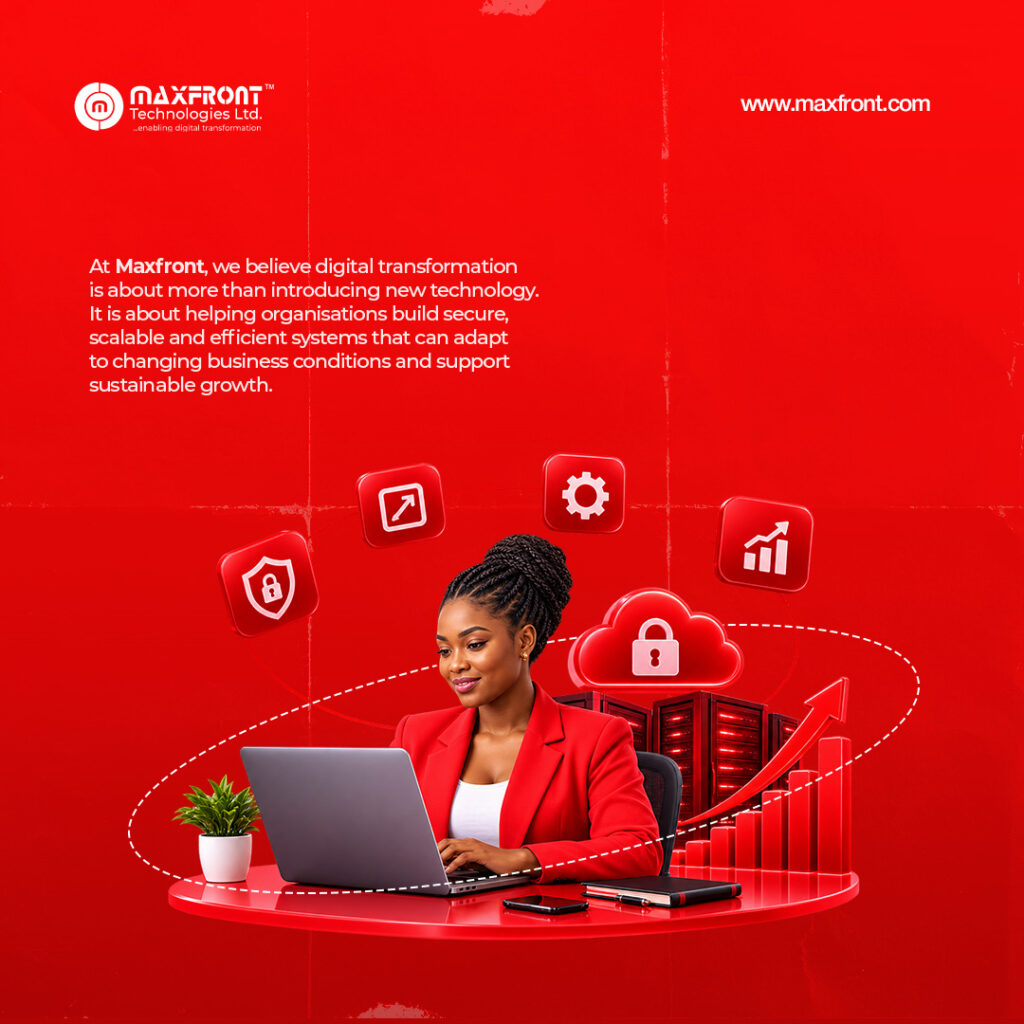
At Maxfront, we believe digital transformation is about more than introducing new technology. It is about helping organizations build secure, scalable, and efficient systems that can adapt to changing business conditions and support sustainable growth.
A resilient supply chain is not simply one that survives disruption. It is one that can identify risks early, respond decisively, and continue serving customers when unexpected challenges arise.
If your organization is looking to strengthen its digital operations and build more resilient business processes, contact Maxfront at info@maxfront.com.