



Cash is no longer king.
At least, not in the way it used to be.
A few years ago, paying bills, transferring money, or opening a bank account often meant standing in long queues, filling out paperwork, and waiting for long processing times.
Today, millions of Nigerians can do all of that from a smartphone.
The shift is happening rapidly.
From mobile banking apps and fintech platforms to QR payments and digital wallets, Nigeria is steadily moving toward a cashless economy. For consumers, businesses, and financial institutions, this transformation is changing how money moves.
Why Nigeria Is Going Cashless
Cash comes with high costs.
Printing, transporting, securing, and managing physical money creates inefficiencies and risks for both businesses and financial institutions. Digital payments, on the other hand, offer a faster, safer, and more efficient alternative.
Transactions become easier to process, simpler to track, and more accessible to customers.
Government-led initiatives aimed at improving financial inclusion and modernizing the financial system have also played a key role in accelerating digital payment adoption.
The result is clear: more Nigerians are shifting from cash to digital transactions.
Mobile Banking Is Driving the Transformation
Nigeria’s digital banking revolution is being powered by smartphones.
For many users, a banking app is now their primary financial tool. Whether transferring money, paying bills, buying airtime, or accessing loans, mobile banking has made financial services more accessible than ever.
Customers no longer need to visit physical branches for everyday transactions.
Their bank is now in their pocket.
Fintech Is Accelerating Adoption
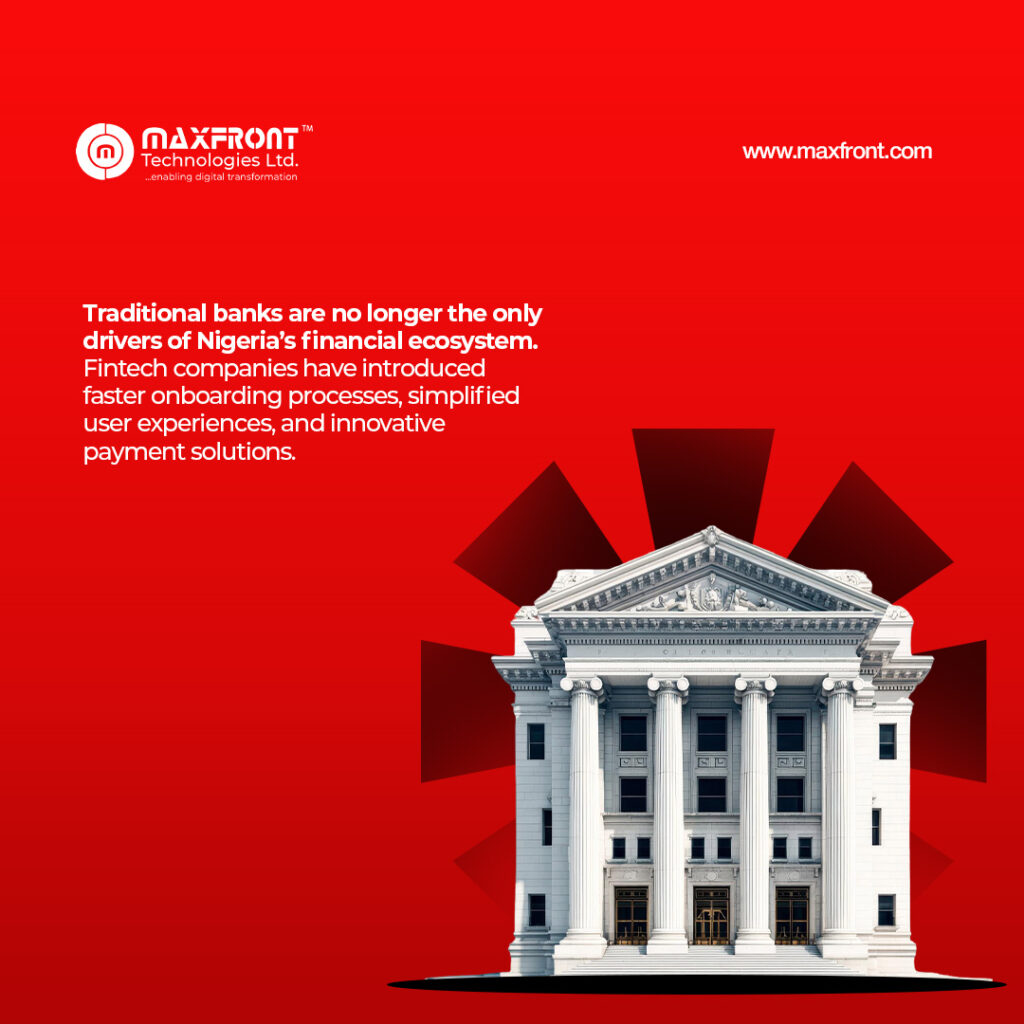
Traditional banks are no longer the only drivers of Nigeria’s financial ecosystem.
Fintech companies have introduced faster onboarding processes, simplified user experiences, and innovative payment solutions. What once took days to complete—such as opening an account—can now be done in minutes. Transactions that once required delays are now processed almost instantly.
This competition is reshaping the industry.
Banks are improving digital services, fintech companies are expanding rapidly, and customers are benefiting from better options and faster experiences.
How Cashless Payments Are Changing Business
The impact of digital payments goes far beyond banking.
Today, consumers expect to pay using bank transfers, mobile apps, QR codes, payment links, and digital wallets.
For businesses, this shift brings several advantages:
- Faster transaction processing
- Improved record keeping
- Reduced cash handling risks
- Better financial visibility
- Easier reconciliation and reporting
With transactions automatically recorded, businesses spend less time on manual processes and gain better control over their financial operations.
Financial Inclusion and Remaining Challenges
One of the most important benefits of digital banking is increased financial inclusion.
Millions of Nigerians who previously had limited access to traditional banking services can now save, transfer money, receive payments, and manage finances using mobile devices.
However, challenges still remain.
Network disruptions can interrupt transactions. Cybersecurity threats continue to evolve. Digital literacy gaps persist in some regions, and some users still prefer cash due to trust concerns.
For Nigeria’s cashless economy to fully mature, providers must continue investing in security, reliability, and user education.
Convenience alone is not enough.
Trust is essential.
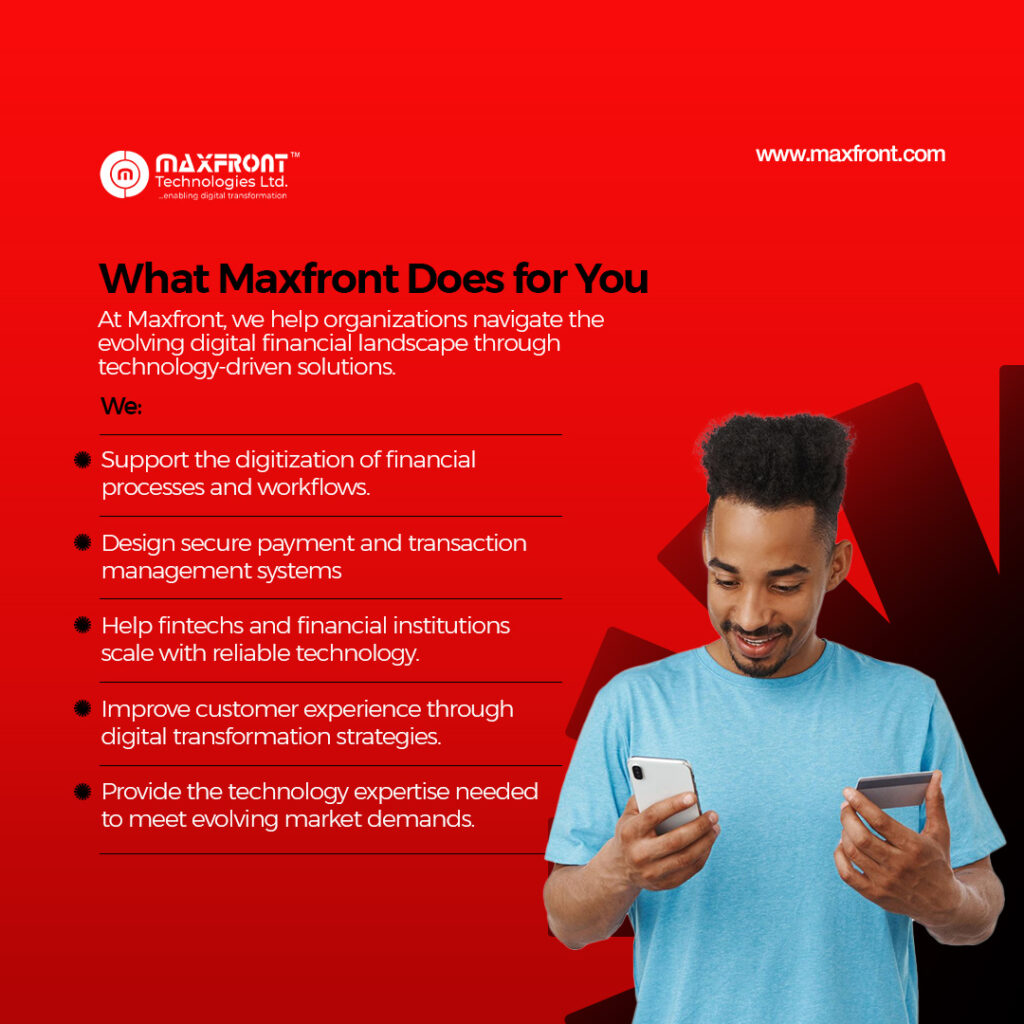
What Maxfront Does for You
At Maxfront, we help organizations navigate the evolving digital financial landscape through technology-driven solutions.
We:
- Support the digitization of financial processes and workflows.
- Design secure payment and transaction management systems
- Help fintechs and financial institutions scale with reliable technology.
- Improve customer experience through digital transformation strategies.
- Provide the technology expertise needed to meet evolving market demands.
Technology should simplify business operations—not complicate them.
That’s where we come in.
What This Means for You
Nigeria’s shift toward a cashless economy is no longer a future trend.
It is happening now.
The organizations that will thrive in the next decade are those that embrace digital banking, modern payment systems, and customer-centric innovation.
Cash may still exist.
But digital payments are quickly becoming the standard.
At Maxfront, we help businesses prepare for that future with scalable, secure, and innovation-driven technology solutions.
Ready to accelerate your digital transformation journey?
Contact us at info@maxfront.com