



In today’s hyper-connected world, email remains the backbone of business communication—used across industries and geographies for everything from internal memos to client collaboration. But as email usage increases, so do the associated security risks.
Cybercriminals are constantly evolving their tactics, and without proper safeguards, your organization could be vulnerable to data breaches, phishing attacks, malware, and more. At Maxfront™ Technologies Ltd., we understand that email security is no longer optional—it’s essential.
Here’s a comprehensive guide on managing email security risks and protecting your organization’s most sensitive communications.

Why Email Security Matters
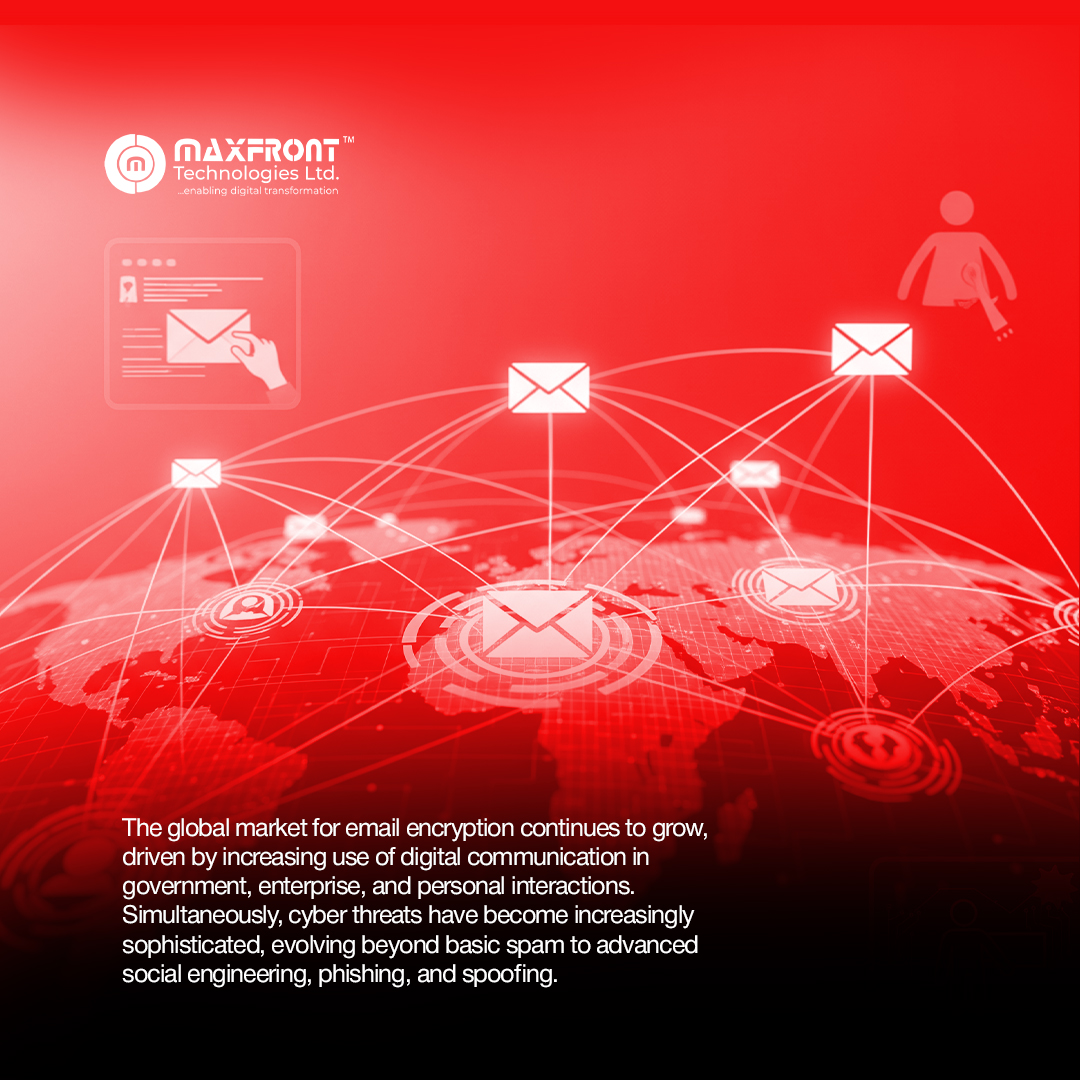
The global market for email encryption continues to grow, driven by increasing use of digital communication in government, enterprise, and personal interactions. Simultaneously, cyber threats have become increasingly sophisticated, evolving beyond basic spam to advanced social engineering, phishing, and spoofing.
Whether you’re running a remote team, managing cloud-based systems, or collaborating internationally, email threats can compromise operations, customer trust, and legal compliance if left unchecked.
Top Email Security Threats You Should Know
- Malware
Attackers often embed malicious software (viruses, spyware, trojans) within email attachments or links. If opened, these can give hackers control of internal systems and access to confidential data.
- Spamming
Spam emails overload inboxes, reduce productivity, and can act as vehicles for malware distribution or phishing attacks.
- Social Engineering
Hackers may impersonate employees or executives to trick users into revealing sensitive information. Email spoofing—forging sender addresses—is a common tactic used here.
- Phishing
Phishing scams deceive users into revealing personal or financial information by pretending to be legitimate entities (e.g., banks, government agencies). These attacks can lead to identity theft, financial fraud, and data breaches.
- Spoofing
Spoofed emails imitate trusted sources. A convincing email might appear to come from your bank or HR department but is actually from a malicious sender looking to harvest login credentials or inject malware.
Essential Elements of a Strong Email Security System
To build a resilient defense, organizations must adopt a multi-layered approach to email security. Here’s what you need:
✅ Reputable Antivirus Software
Deploy a trusted antivirus that automatically scans all incoming attachments and links for malware and worms.
✅ Anti-Spyware Solutions
Protect against Trojans, key loggers, and other spyware commonly embedded in email content. Opt for solutions that offer real-time protection and regular updates.
✅ Spam Filters
Implement robust spam filtering systems to reduce unwanted emails and limit the entry points for phishing attacks or malware-laced messages.
✅ Content Security Software
Prevent data leaks by monitoring and restricting sensitive content in emails, whether shared intentionally or by accident.
✅ Email Encryption
Encrypt email messages containing sensitive data using technologies like Public Key Infrastructure (PKI). If PKI is too costly for your business, consider exploring secure web-based email platforms that offer end-to-end encryption.
✅ Email Usage Policy
Set clear guidelines for employees on how to use corporate email responsibly. This can reduce risks from:
- Personal use of company email
- Unverified downloads
- Subscription to unnecessary services
What About Third-Party Risks?
Even with the best in-house protections, you can’t control how secure your external partners or clients are. This makes it essential to:
- Educate staff on recognizing phishing and spoofing attempts
- Avoid sending sensitive data over unencrypted channels
- Use secure file-sharing platforms when possible
New Frontiers: Cloud Email Security
As businesses shift to cloud-based platforms like Microsoft 365 and Google Workspace, they open themselves up to new email vulnerabilities.
Whether you’re fully cloud-based or running a hybrid infrastructure:
- Implement multi-factor authentication (MFA)
- Regularly audit your cloud email configurations
- Use cloud access security brokers (CASBs) to monitor and secure data flow
Final Thoughts: Prevention is Better Than a Cure
Email threats are here to stay, but being proactive about security makes all the difference. At Maxfront™ Technologies Ltd., we help organization’s integrate secure communication protocols, automate threat detection, and build robust security frameworks tailored to their specific operations.
If your organization is struggling with email security, we offer consultancy and solutions that protect your people, processes, and platforms from malicious actors.
📩 Contact us today at info@maxfront.com or visit www.maxfront.com to discover how we can secure your communication ecosystem.