




Quantum computing, once a theoretical concept, is rapidly becoming a reality with the potential to revolutionize various industries. By leveraging the principles of quantum mechanics, quantum computers can process information at unprecedented speeds, solving complex problems currently beyond the reach of classical computers. The future possibilities that quantum computing holds are truly exciting. Here’s how it is poised to transform different industries.
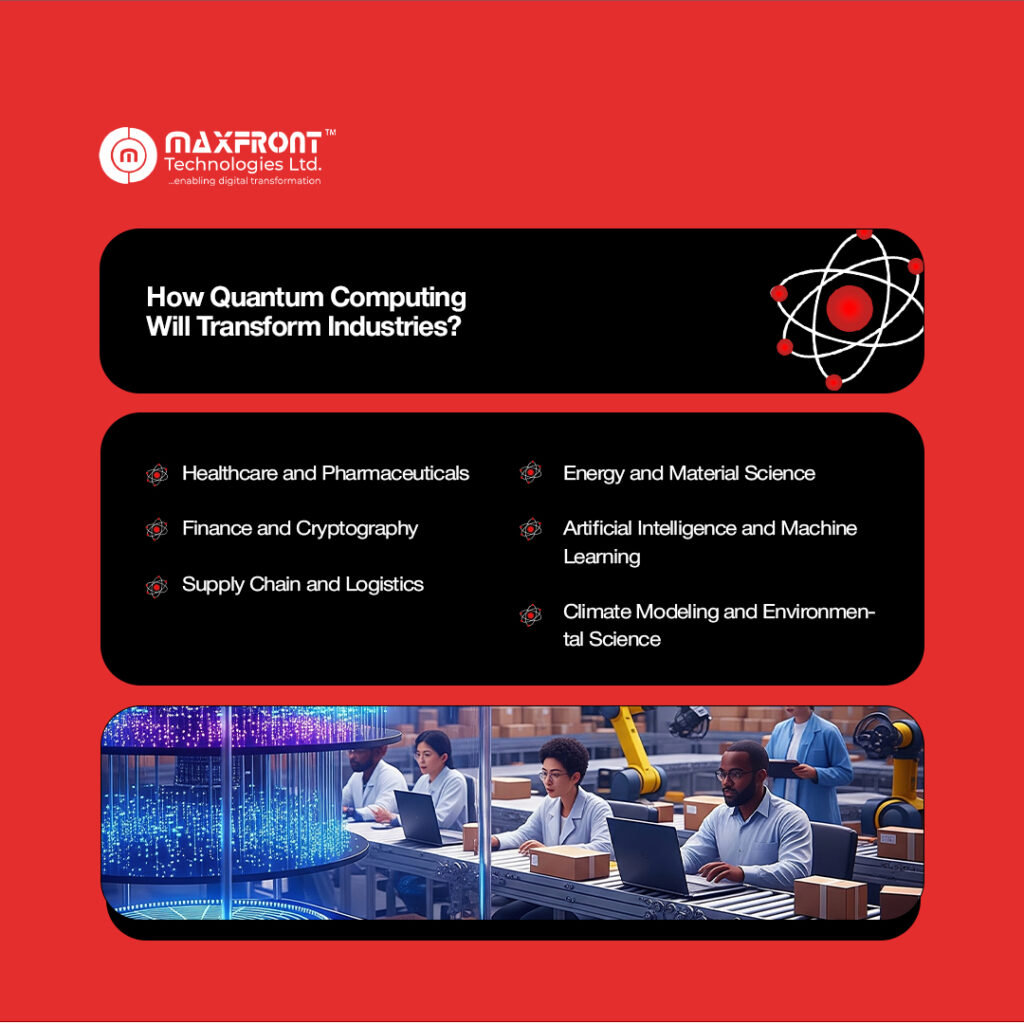
1. Healthcare and Pharmaceuticals
Quantum computing will profoundly impact healthcare and pharmaceuticals by accelerating drug discovery and development. Traditional drug discovery involves significant time and resources, but quantum computers can simulate molecular interactions quickly and accurately, identifying potential drug candidates much faster. This transformative capability will lead to the development of new treatments and therapies, potentially curing diseases that are currently incurable, offering hope for the future of medicine.
Additionally, quantum computing will enhance personalized medicine by analyzing vast amounts of genetic data to identify the most effective treatments for individual patients. This approach, with its potential to improve patient outcomes and reduce healthcare costs, offers a reassuring glimpse into the future of healthcare.
2. Finance and Cryptography
The finance industry stands to benefit significantly from quantum computing. Quantum algorithms can optimize trading strategies, manage risk, and improve fraud detection. These capabilities will enable financial institutions to make more informed decisions and increase profitability.
However, quantum computing also poses a threat to current cryptographic methods. Quantum computers can break widely used encryption protocols, making data vulnerable. To counter this, the development of quantum-resistant cryptography is underway, ensuring data security in a quantum computing era.
3. Supply Chain and Logistics
Quantum computing will revolutionize supply chain management and logistics by optimizing complex networks and improving efficiency. Quantum algorithms can analyze numerous variables, such as demand fluctuations, transportation routes, and inventory levels, to find the most efficient solutions. This optimization will reduce costs, minimize delays, and enhance overall supply chain performance.
For example, quantum computing can optimize delivery routes for logistics companies, reducing fuel consumption and improving delivery times. In manufacturing, it can streamline production processes, resulting in higher efficiency and lower costs.
4. Energy and Material Science
The energy sector will benefit from quantum computing through enhanced energy optimization and the development of new materials. Quantum computers can model complex chemical reactions and materials at the atomic level, leading to the discovery of more efficient energy sources and storage solutions.
In renewable energy, quantum computing can optimize the placement and operation of wind turbines and solar panels, maximizing energy output. It can also improve battery technology, leading to more efficient and longer-lasting energy storage solutions.
5. Artificial Intelligence and Machine Learning
Quantum computing will significantly enhance artificial intelligence (AI) and machine learning (ML) capabilities. Quantum algorithms can process vast amounts of data at unprecedented speeds, enabling more accurate and efficient training of AI models. This improvement will lead to advanced AI applications in various fields, from natural language processing to autonomous vehicles.
Moreover, quantum computing can solve complex optimization problems in AI, such as neural network training, leading to faster and more efficient AI systems. This advancement will accelerate the development of intelligent technologies, transforming industries and everyday life.
6. Climate Modeling and Environmental Science
Quantum computing will play a crucial role in climate modelling and environmental science. Accurate climate models are essential for understanding and mitigating the effects of climate change. Quantum computers can analyze vast amounts of ecological data and simulate complex climate systems with higher precision, providing valuable insights for policymakers and scientists.
In environmental science, quantum computing can optimize resource management and conservation efforts. For example, it can improve water distribution systems, reduce energy consumption, and enhance wildlife conservation strategies.

Conclusion
Quantum computing holds immense potential to transform industries by solving complex problems and optimizing processes that are currently beyond the capabilities of classical computers. From healthcare and finance to supply chain management and climate modelling, the impact of quantum computing will be far-reaching and transformative.
As we move towards a quantum future, industries must prepare to harness the power of quantum computing to stay competitive and drive innovation. While challenges remain, quantum research and development progress is promising, and the next decade will likely witness significant breakthroughs that will reshape our world.
Stay updated with Maxfront Technologies for more insights on emerging technologies and their impact on various industries. The quantum revolution is just beginning, and its potential is limitless.