



Software has transformed every industry, and now it is changing how decisions are made in the boardroom, too.
The era of executives relying solely on intuition is ending. In its place emerges a new model: the tech-augmented leader. Decision-making in modern enterprises is no longer purely human—it is hybrid, part human judgment, part machine intelligence, and entirely dependent on digital infrastructure.
CTOs, CIOs, and CEOs leading digital change are not asking if they should use technology in their strategy, but how to build decision-making systems that can handle growing complexity.
- The Rise of the Digital Nervous System
In the past, companies received information slowly. Reports often arrived weeks late, so decisions were based on outdated data.
Today’s companies need a digital system that lets data move quickly and smoothly between daily operations and strategic planning.
What winning leaders are building:
- Unified data systems: Connect CRM, ERP, HRIS, and other tools to create one reliable source of information.
- Event-driven systems: Move from processing data in batches to handling real-time events that allow for quick, smart responses.
- APIs as connectors: Make each business function a service that can share information automatically.
- Data lakes with oversight: Store all data in one place, keeping it organized, labeled, and secure.
The goal is not just to have more data, but to have data that is up-to-date, easy to access, and reliable.
- From Dashboards to Decision Intelligence
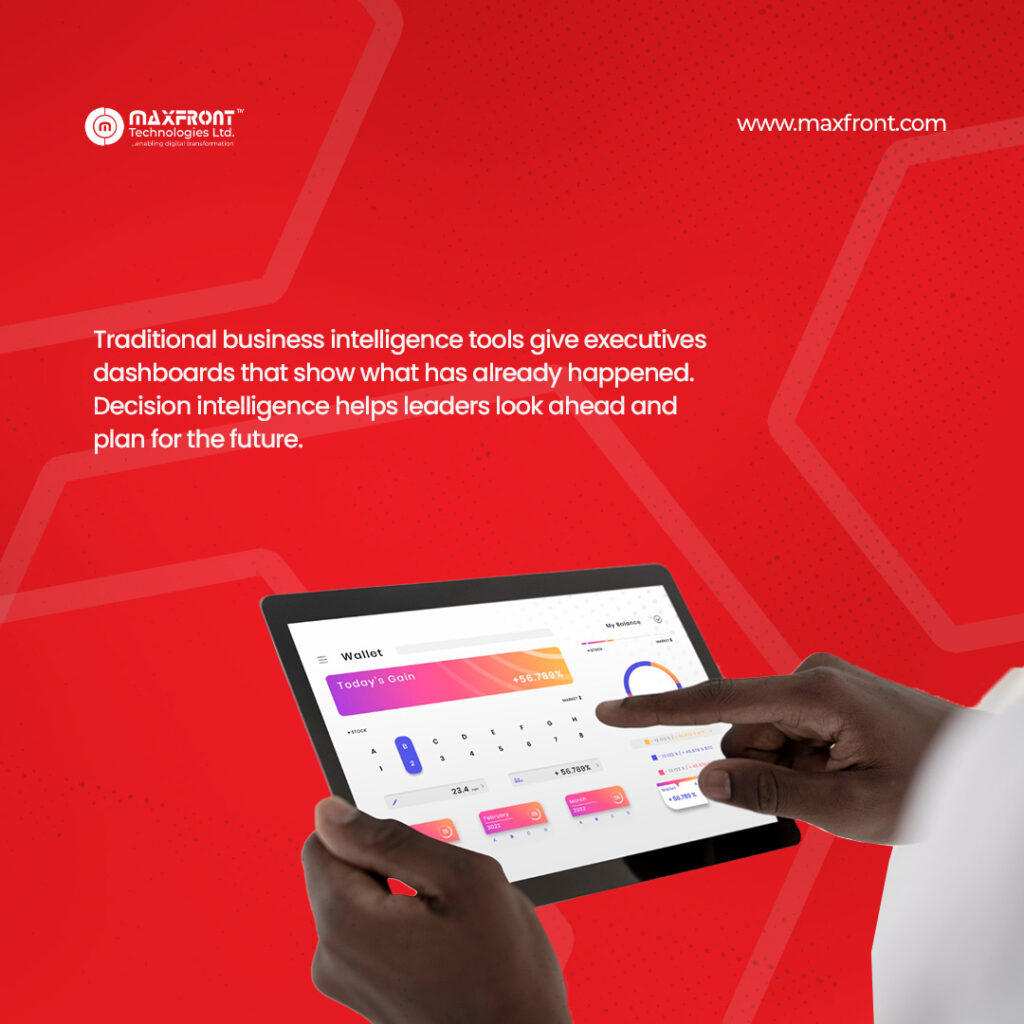
Traditional business intelligence tools give executives dashboards that show what has already happened. Decision intelligence helps leaders look ahead and plan for the future.
The shift:
- Legacy BI: Tableau, Power BI, Looker (descriptive: What happened?)
- Next-gen DI: Aera, Tellius, Kineviz (predictive & prescriptive: What should we do?)
Capabilities enabled:
- Scenario modelling at scale: Test pricing, supply chains, or market entries before committing capital.
- Automated anomaly detection: Flag problems in real-time.
- Recommendation engines: Machine learning suggests optimal resource allocation.
Executives do not just need better-looking charts. They need systems that can quickly provide answers to important questions.
- AI-Augmented Judgment: The Co-Pilot Model
AI is not replacing executives. Instead, it is becoming a helpful partner in decision-making.
Use cases:
- Generative AI for scenario synthesis: Digest thousands of pages of research into strategic summaries.
- Predictive talent analytics: Forecast which leaders will succeed in specific roles.
- Risk intelligence platforms: Scan regulations, geopolitics, and social sentiment for emerging threats.
Architecture behind it:
- Fine-tuned LLMs on internal strategy documents
- Vector databases for semantic knowledge search
- Secure APIs linking AI layers to proprietary data
Executives who use AI will have an advantage over those who do not.
- Decisions are still made in meetings, but the background information is now stored in digital collaboration tools. It now lives in digital collaboration platforms.
Modern decision stack:
- Asynchronous strategy docs: Notion, Coda, Confluence
- Visual collaboration: Miro, Lucidspark
- Decision logging: Track who decided what, when, and based on which data
Benefits:
- Decisions become auditable
- Institutional memory collaboration tools are not just for messaging anymore. They help teams think and work together more effectively.st for chat—they are about cognitive alignment.
- As algorithms play a bigger role in shaping strategy, strong oversight becomes essential. Once more, strategy and governance become critical.
Infrastructure for responsible AI:
- Model explainability: Understand why AI made a recommendation (Fiddler AI, Arize).
- Bias detection: Automated testing of training data and outputs.
- Human-in-the-loop workflows: Executive review before implementation. Technology does not take away responsibility. Instead, it increases the impact of every decision.t amplifies the consequences of every decision.
- Building the Decision-Ready Enterprise
Technology by itself does not lead to better decisions. It gives organizations the ability to make them, but success still depends on culture, discipline, and leadership.
What tech leaders must deliver:
- Latency reduction: Shorten the time between the signal and the decision.
- Cognitive scalability: Handle complexity without overload.
- Resilience: Systems that keep functioning despite missing data or network issues.
- Human-centred design: Technology should help users, not leave them feeling left out.
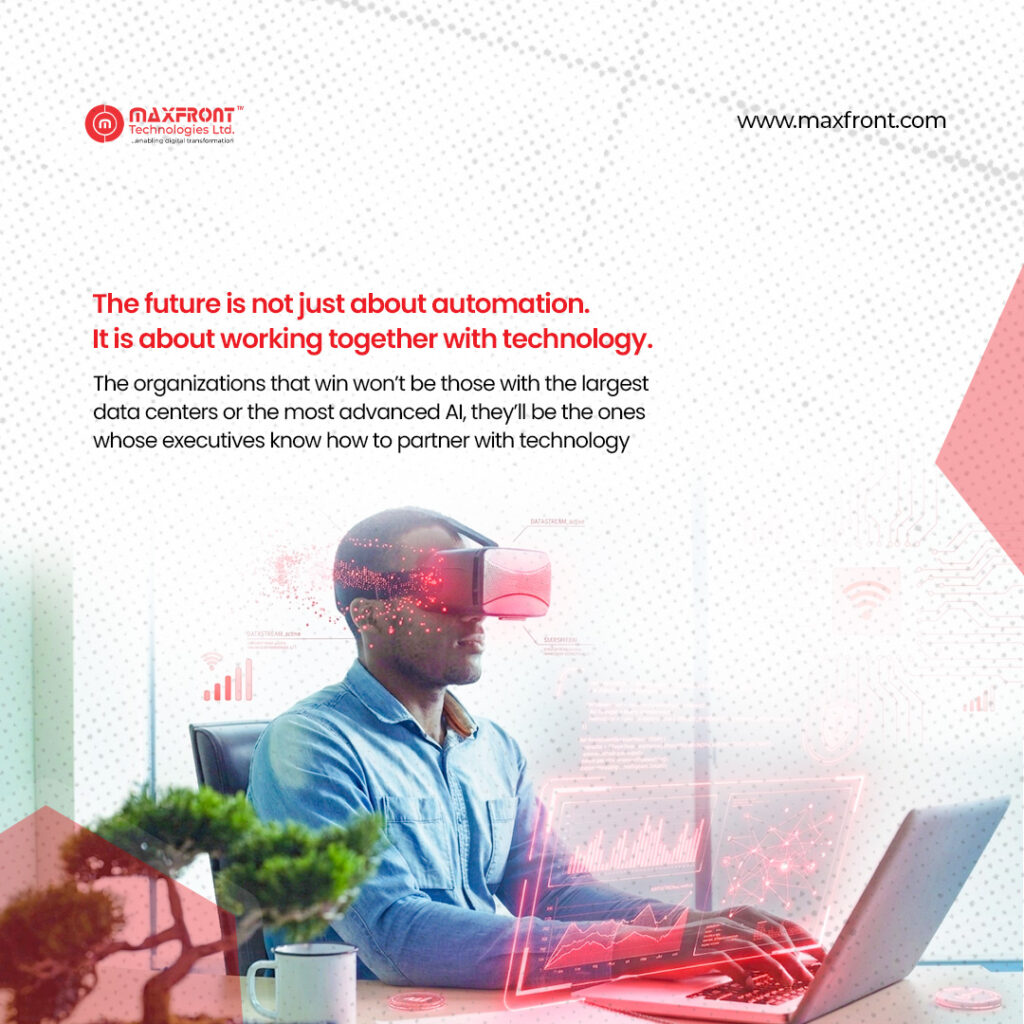
The future is not just about automation. It is about working together with technology.
The organizations that win won’t be those with the largest data centers or the most advanced AI—they’ll be the ones whose executives know how to partner with technology: seeing patterns they’d miss, simulating futures they couldn’t imagine, and executing decisions at speeds humans alone could never achieve.
At Maxfront, we build decision systems that make this possible. We help leaders turn information into insight, and insight into action, using unified data systems and strong AI oversight.
Are you ready to change how your company makes decisions? Contact us at info@maxfront.com.
We create systems that help leaders make decisions more quickly, clearly, and intelligently than ever before.