



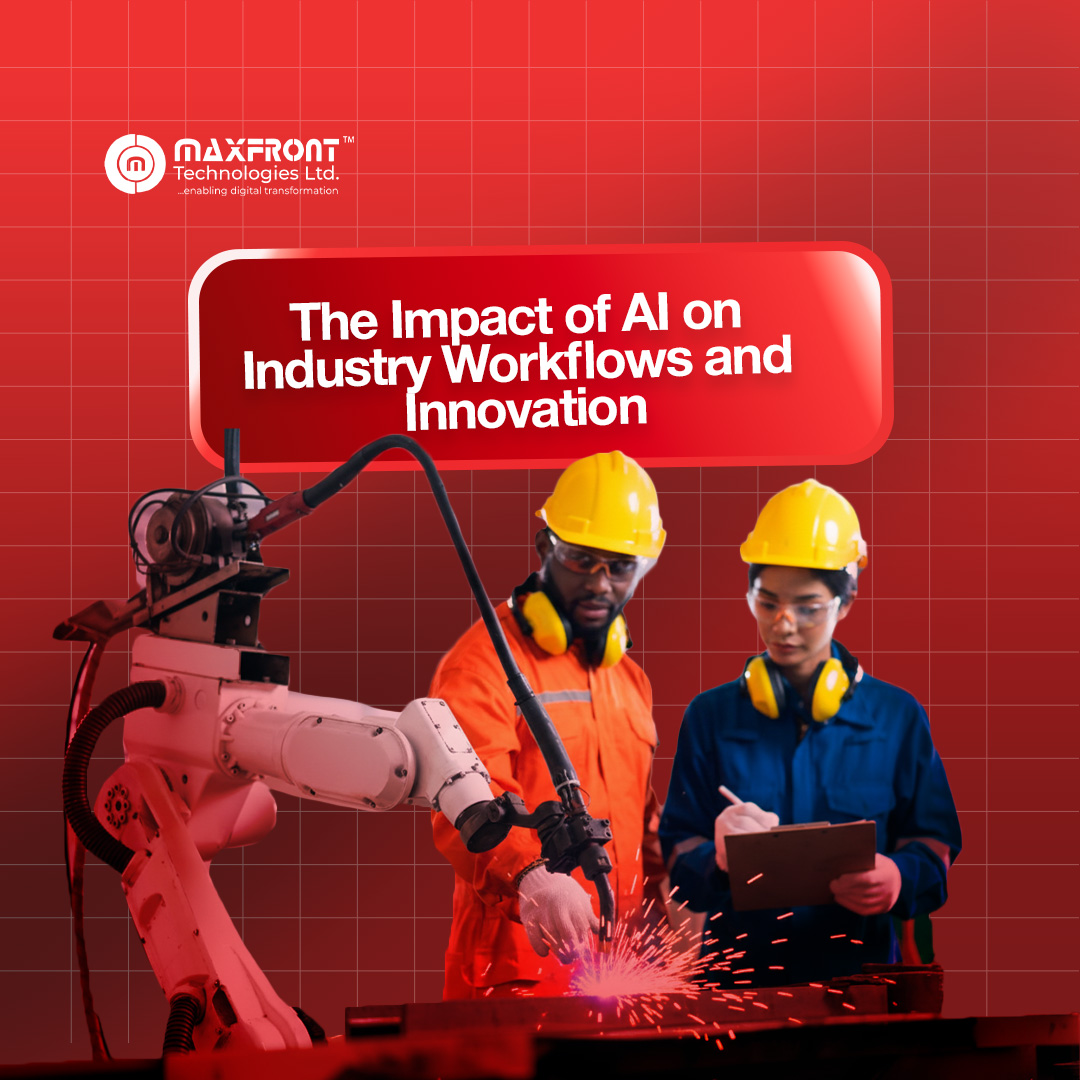
The Impact of AI on Industry Workflows and Innovation
In today’s fast-paced, data-driven world, simply working harder is no longer enough. Organisations now need to work smarter. Many traditional processes can no longer keep up with the growing demand for speed, accuracy, and insight. This is where Artificial Intelligence (AI) comes in, not as a future idea, but as a practical tool already changing how businesses operate across industries.
More organisations are adopting AI to improve efficiency, support better decision-making, and create new opportunities for growth. However, technology alone is not the solution. Real impact only happens when AI is properly integrated into everyday workflows and aligned with long-term business goals.
Why Simply “Having AI” Is Not Enough
There is a common belief that once an organisation adopts AI, performance will automatically improve. In reality, results depend on how well the technology is integrated into existing processes.
An AI tool for analytics, customer service, or forecasting is only effective when the right people can access and act on its insights. For example, a bank may deploy AI to detect fraud, but if those insights do not reach the compliance team on time, the value is lost. The same applies to manufacturers that receive predictive maintenance alerts that never get to the technicians who need them.
AI has potential, but strategy, people, and execution turn that potential into real results.
Transforming Workflows, One Process at a Time
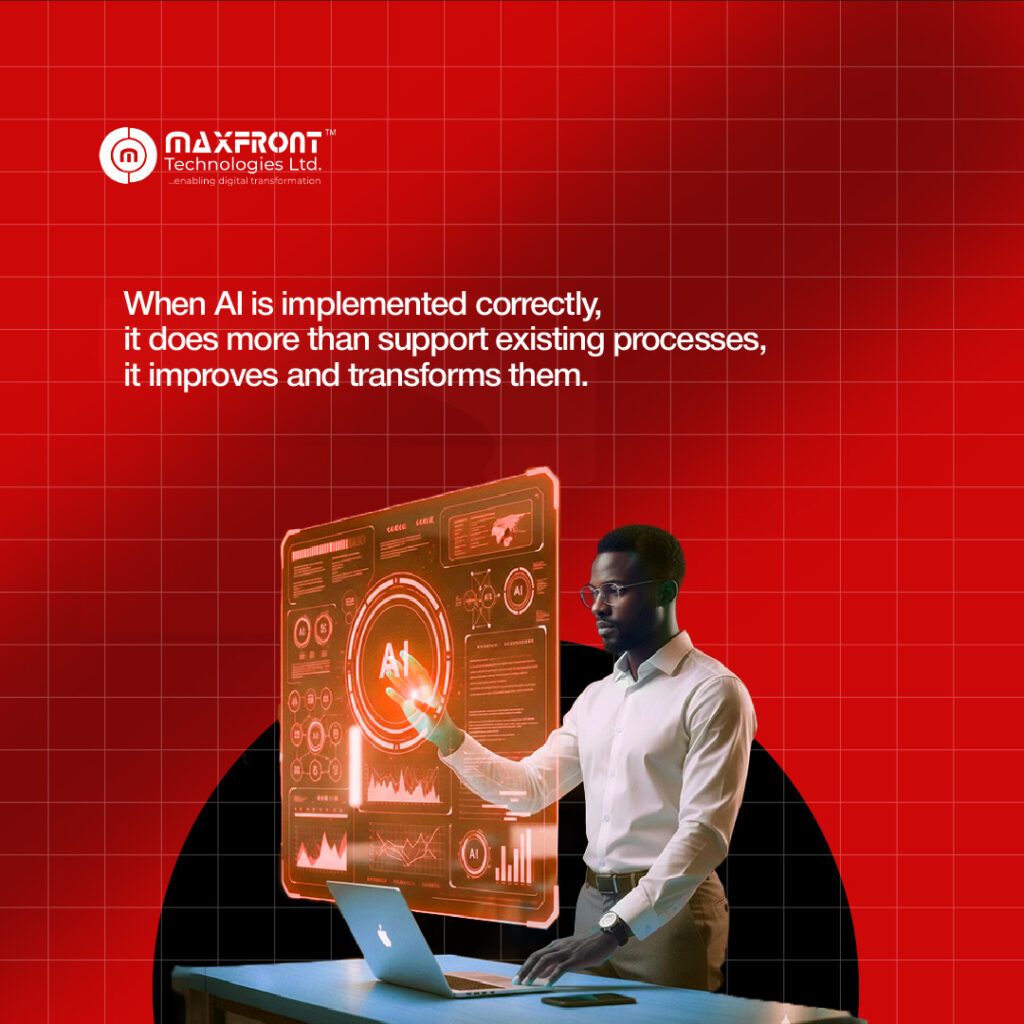
When AI is implemented correctly, it does more than support existing processes, it improves and transforms them. Manual and repetitive tasks gradually give way to smarter systems that can learn and adapt over time.
Some of the changes organisations experience include:
- Intelligent automation, where repetitive tasks such as data entry, invoice processing, and customer enquiries are handled faster and more accurately.
- Real-time decision support, enabling leaders to make informed choices on pricing, inventory, and risk using live data.
- Predictive operations help businesses identify equipment issues, demand changes, or customer behaviour early.
- Better collaboration across departments, as AI helps break down data silos between teams like IT, operations, and finance.
This shift helps organisations move from reacting to problems to anticipating and preventing them.
AI as a Driver of Innovation
Beyond efficiency, AI plays a major role in driving innovation. By analysing large volumes of data — both structured and unstructured — AI can uncover insights that would be difficult for humans to spot on their own.
This leads to:
- More personalised customer experiences
- Improved diagnostics and patient care in healthcare
- Smarter risk assessment and financial products
- More responsive supply chains
- Better asset management in energy and manufacturing
Innovation today is not just about launching new products. It is about delivering smarter services, improving business models, and engaging customers more effectively.
Bridging the Gap Between Technology and Business Strategy
Many AI initiatives struggle because there is a disconnect between technical teams and business leaders. While technical teams focus on building systems, business leaders focus on revenue, costs, and customer satisfaction. Without alignment between both sides, even well-designed AI projects may fail to deliver value.
How Consulting Helps Unlock Real AI Value
Making AI work for an organisation requires more than installing software. It requires clear direction, process redesign, and strong buy-in across the organisation. Strategic consulting supports this by:
- Identifying AI use cases with the highest business impact
- Redesigning workflows to align with business objectives
- Ensuring AI initiatives support the overall company strategy
- Managing change and supporting secure, scalable implementation
Maxfront Technologies: Enabling Intelligent Workflows
At Maxfront Technologies, we help organisations move beyond the hype around AI. We work closely with our clients to turn AI from a technical tool into a practical business asset. Through advisory services, advanced analytics, workflow automation, and implementation support, we help organisations embed intelligence into their core operations — improving efficiency, resilience, and long-term competit
The Impact of AI on Industry Workflows and Innovation
In today’s fast-paced, data-driven world, simply working harder is no longer enough. Organisations now need to work smarter. Many traditional processes can no longer keep up with the growing demand for speed, accuracy, and insight. This is where Artificial Intelligence (AI) comes in, not as a future idea, but as a practical tool already changing how businesses operate across industries.
More organisations are adopting AI to improve efficiency, support better decision-making, and create new opportunities for growth. However, technology alone is not the solution. Real impact only happens when AI is properly integrated into everyday workflows and aligned with long-term business goals.
Why Simply “Having AI” Is Not Enough
There is a common belief that once an organisation adopts AI, performance will automatically improve. In reality, results depend on how well the technology is integrated into existing processes.
An AI tool for analytics, customer service, or forecasting is only effective when the right people can access and act on its insights. For example, a bank may deploy AI to detect fraud, but if those insights do not reach the compliance team on time, the value is lost. The same applies to manufacturers that receive predictive maintenance alerts that never get to the technicians who need them.
AI has potential, but strategy, people, and execution turn that potential into real results.
Transforming Workflows, One Process at a Time
When AI is implemented correctly, it does more than support existing processes, it improves and transforms them. Manual and repetitive tasks gradually give way to smarter systems that can learn and adapt over time.
Some of the changes organisations experience include:
- Intelligent automation, where repetitive tasks such as data entry, invoice processing, and customer enquiries are handled faster and more accurately.
- Real-time decision support, enabling leaders to make informed choices on pricing, inventory, and risk using live data.
- Predictive operations help businesses identify equipment issues, demand changes, or customer behaviour early.
- Better collaboration across departments, as AI helps break down data silos between teams like IT, operations, and finance.
This shift helps organisations move from reacting to problems to anticipating and preventing them.
AI as a Driver of Innovation
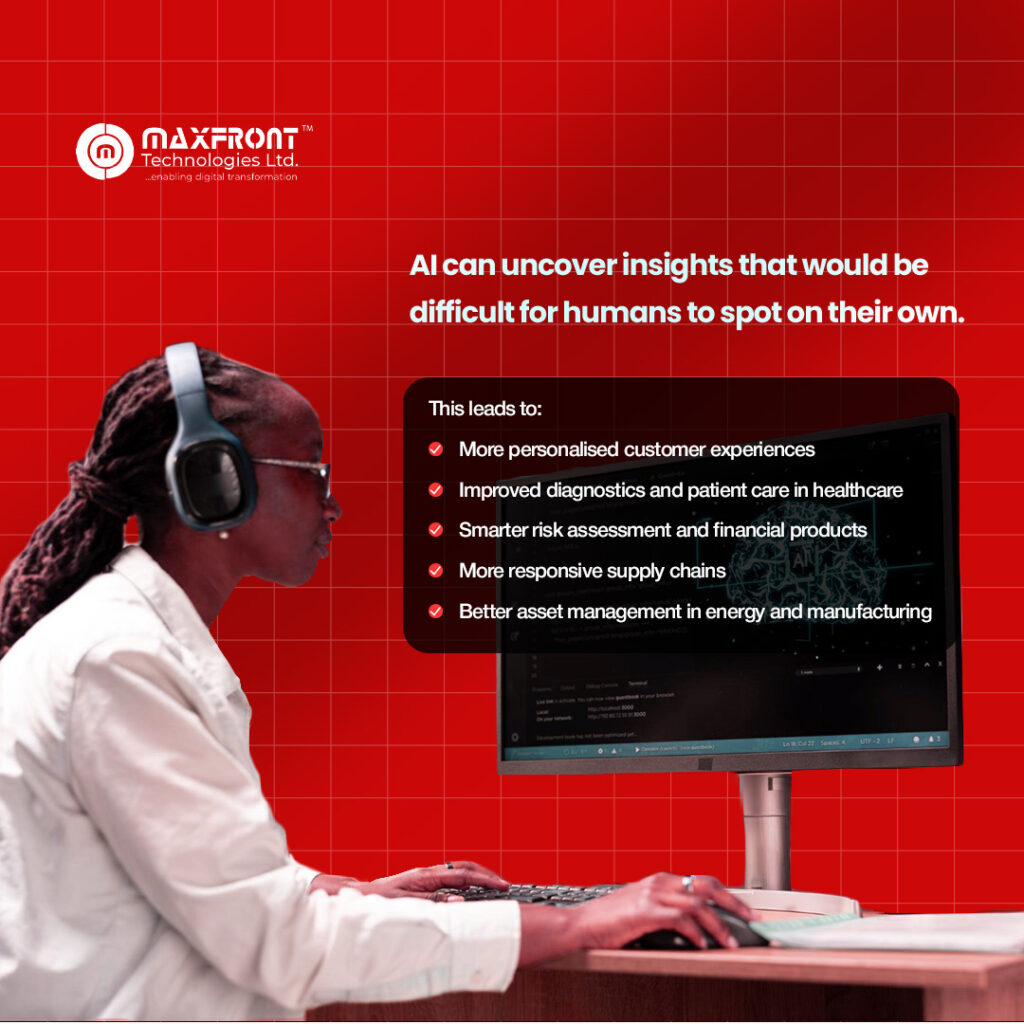
Beyond efficiency, AI plays a major role in driving innovation. By analysing large volumes of data — both structured and unstructured — AI can uncover insights that would be difficult for humans to spot on their own.
This leads to:
- More personalised customer experiences
- Improved diagnostics and patient care in healthcare
- Smarter risk assessment and financial products
- More responsive supply chains
- Better asset management in energy and manufacturing
Innovation today is not just about launching new products. It is about delivering smarter services, improving business models, and engaging customers more effectively.
Bridging the Gap Between Technology and Business Strategy
Many AI initiatives struggle because there is a disconnect between technical teams and business leaders. While technical teams focus on building systems, business leaders focus on revenue, costs, and customer satisfaction. Without alignment between both sides, even well-designed AI projects may fail to deliver value.
How Consulting Helps Unlock Real AI Value
Making AI work for an organisation requires more than installing software. It requires clear direction, process redesign, and strong buy-in across the organisation. Strategic consulting supports this by:
- Identifying AI use cases with the highest business impact
- Redesigning workflows to align with business objectives
- Ensuring AI initiatives support the overall company strategy
- Managing change and supporting secure, scalable implementation
Maxfront Technologies: Enabling Intelligent Workflows
At Maxfront Technologies, we help organisations move beyond the hype around AI. We work closely with our clients to turn AI from a technical tool into a practical business asset. Through advisory services, advanced analytics, workflow automation, and implementation support, we help organisations embed intelligence into their core operations — improving efficiency, resilience, and long-term competitiveness.
The Real-World Impact
AI is quickly becoming a core part of how modern organisations operate and grow. Businesses that integrate AI thoughtfully into their workflows and strategies will benefit from faster decision-making, lower operational costs, improved customer experiences, and sustainable innovation.
Ready to make AI work for your workflows?
Contact us at info@maxfront.com for more inquiries.