




Forget the sci-fi fantasies. Real AI isn’t about sentient robots; it’s practical intelligence that streamlines services, predicts problems, and frees human talent for irreplaceable work. But if deployed carelessly, it can also amplify bias or erode trust. The challenge for Africa’s public sector is clear: capture the benefits of AI without undermining the citizens it’s meant to serve.
The AI Reality Check
Across Africa, governments are experimenting with AI in everything from health care to permitting. The results show that AI is not a luxury; it’s a necessity when managed responsibly.
For example, Rwanda now uses AI-powered flood-forecasting tools like Google’s Flood Hub. These tools give early warnings and multi-day forecasts, helping communities and authorities get ready for floods. In South Africa, platforms such as GovChat use WhatsApp and other messaging apps to link citizens with government services. This allows millions of people to get information, apply for services, and report issues quickly.
These examples show that AI can be a practical tool for improving public-sector services.
Opportunities & Guardrails
Predictive Analytics: Fix Problems Before They Explode
AI can forecast infrastructure failures like water pipes or power grids, anticipate disease outbreaks from health data, and optimize how schools and clinics get resources.
But here’s the catch: data privacy matters. Without protections, citizens risk having their information misused. As already piloted in some African contexts, solutions like anonymized data pools and opt-out rights ensure predictive analytics serve people without invading their lives.
Intelligent Chatbots: 24/7 Citizen Service
AI chatbots can answer routine tax and permit queries in local languages, triage complex cases to human agents, and reduce call center costs by 30–40%.
Yet the offline population must not be left behind. Rwanda’s IremboGov offers a good model: digital kiosks balance chatbot efficiency with human access points in rural areas.
Automated Permits & Workflows
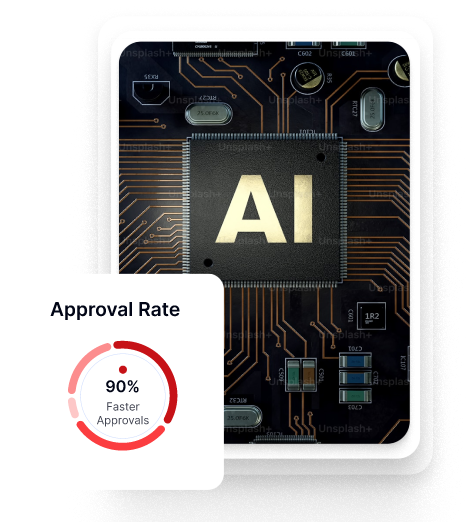
AI-powered systems are slashing red tape. In some cases, permit approvals are now processed in half the time, freeing agencies to focus on oversight instead of paperwork.
The risk? Algorithmic bias. Automated systems can unintentionally favor certain demographics if not carefully tested. The fix is proactive bias testing, explainability tools, and third-party audits, approaches increasingly seen in Nigeria’s digital identity programs and beyond.
Maxfront’s Responsible AI Approach
At MaxFront, we believe responsible AI in government isn’t optional — it’s foundational. That’s why we design accountability into every deployment.
Bias testing built in: to ensure no community is left behind.
Explainability tools: making AI decision paths transparent and auditable.
Hybrid escalation models: Chatbots handle routine queries, while humans step in for complex cases.
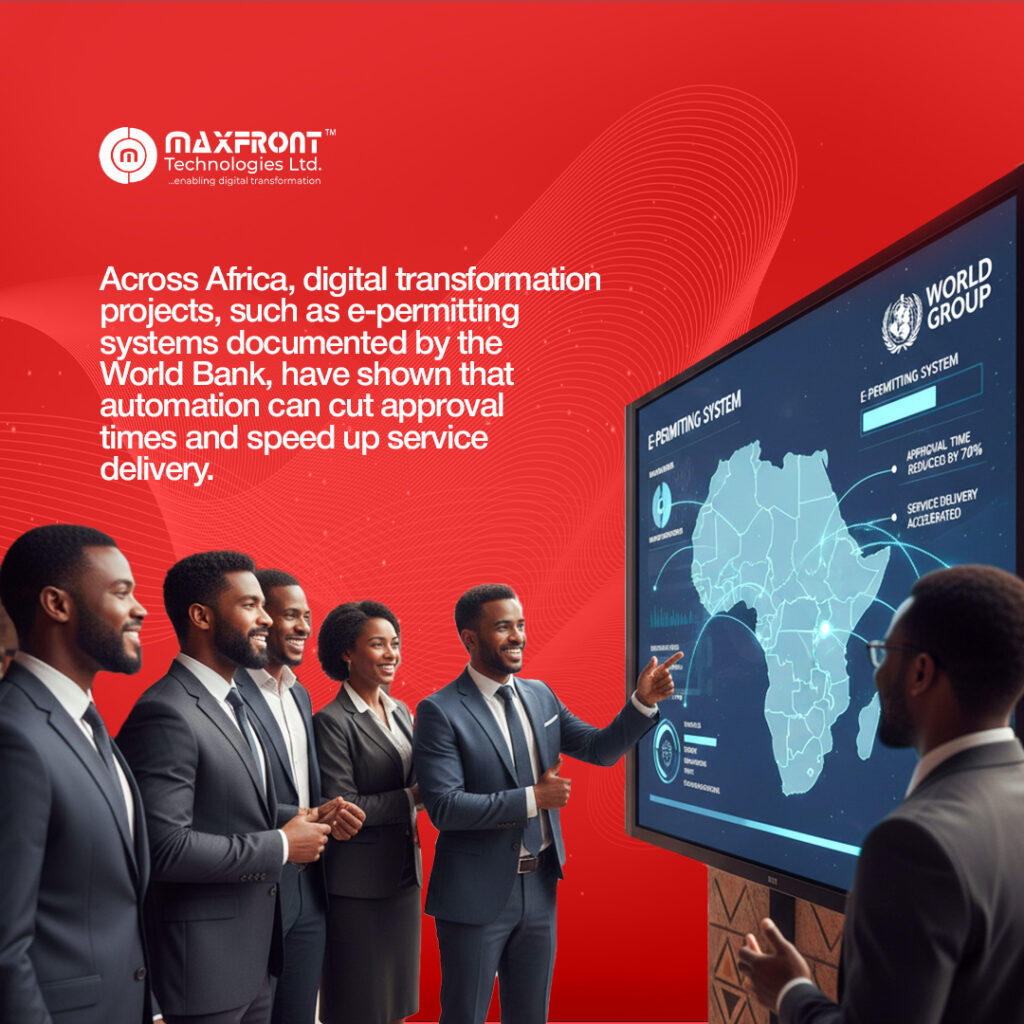
Across Africa, digital transformation projects, such as e-permitting systems documented by the World Bank, have shown that automation can cut approval times and speed up service delivery. Drawing on these proven models, MaxFront partners with government agencies to streamline workflows and improve resolution times, while ensuring citizen trust stays at the center.
Simply put: we don’t just deliver AI; we deliver AI that earns trust.
The Takeaway
AI success in the public sector hinges on one question: Does this put citizens first or just cut costs?
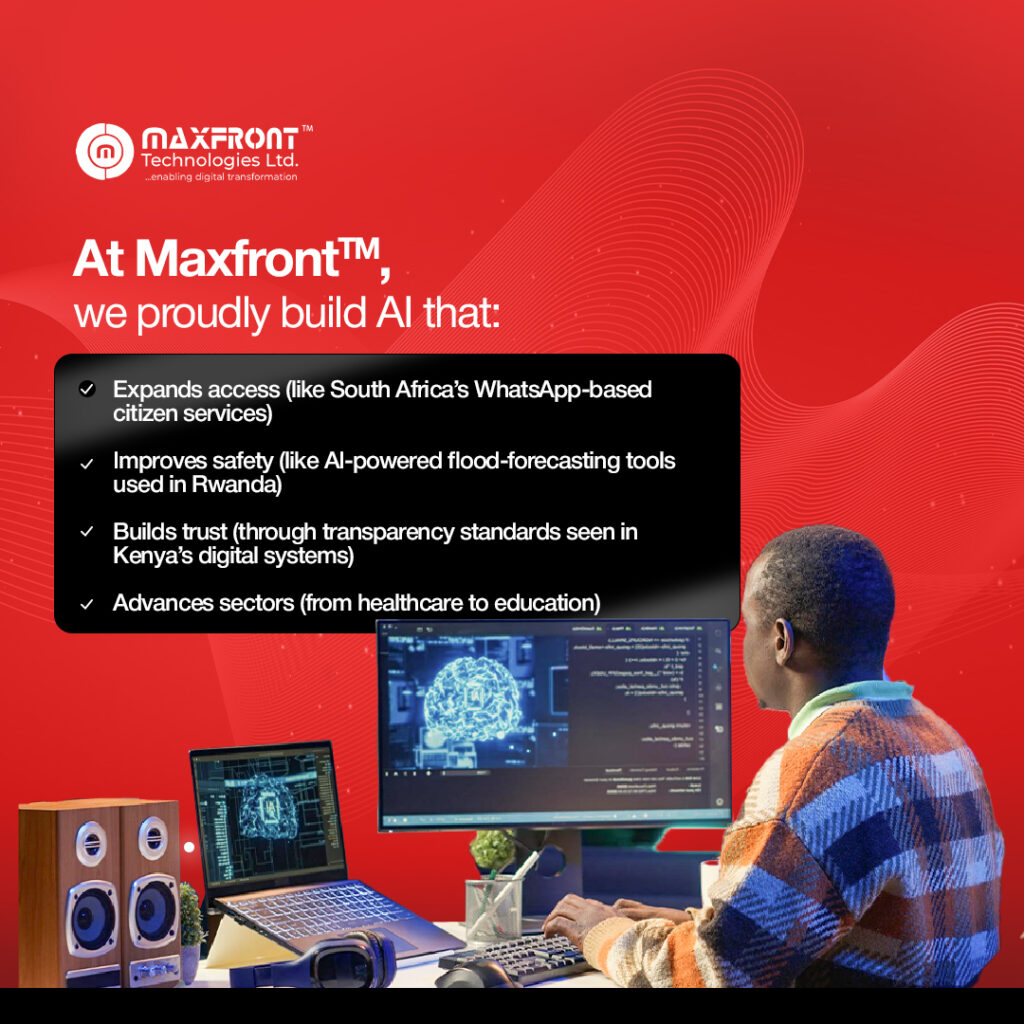
At Maxfront™, we proudly build AI that:
Expands access (like South Africa’s WhatsApp-based citizen services)
Improves safety (like AI-powered flood-forecasting tools used in Rwanda)
Builds trust (through transparency standards seen in Kenya’s digital systems)
Advances sectors(from healthcare to education)
If your agency’s AI strategy risks bias, inefficiency, or public distrust, let’s fix that before it costs you.
Contact us at info@maxfront.com to explore how responsible automation can strengthen citizen services and deliver the fastest ROI for your agency.