




In today’s increasingly competitive and talent-driven IT industry, remote work is not just a trend—it’s a strategic necessity. As organisations seek the best talent regardless of geography, many are building geographically dispersed IT teams. While managing remote teams presents challenges, when done correctly, it offers significant advantages in productivity, flexibility, and innovation.
At Maxfront™ Technologies Ltd., we believe that leading remote IT teams to long-term success requires a proactive, intentional approach. Here are 7 key strategies to help IT leaders manage dispersed teams effectively and keep them motivated, aligned, and high-performing.
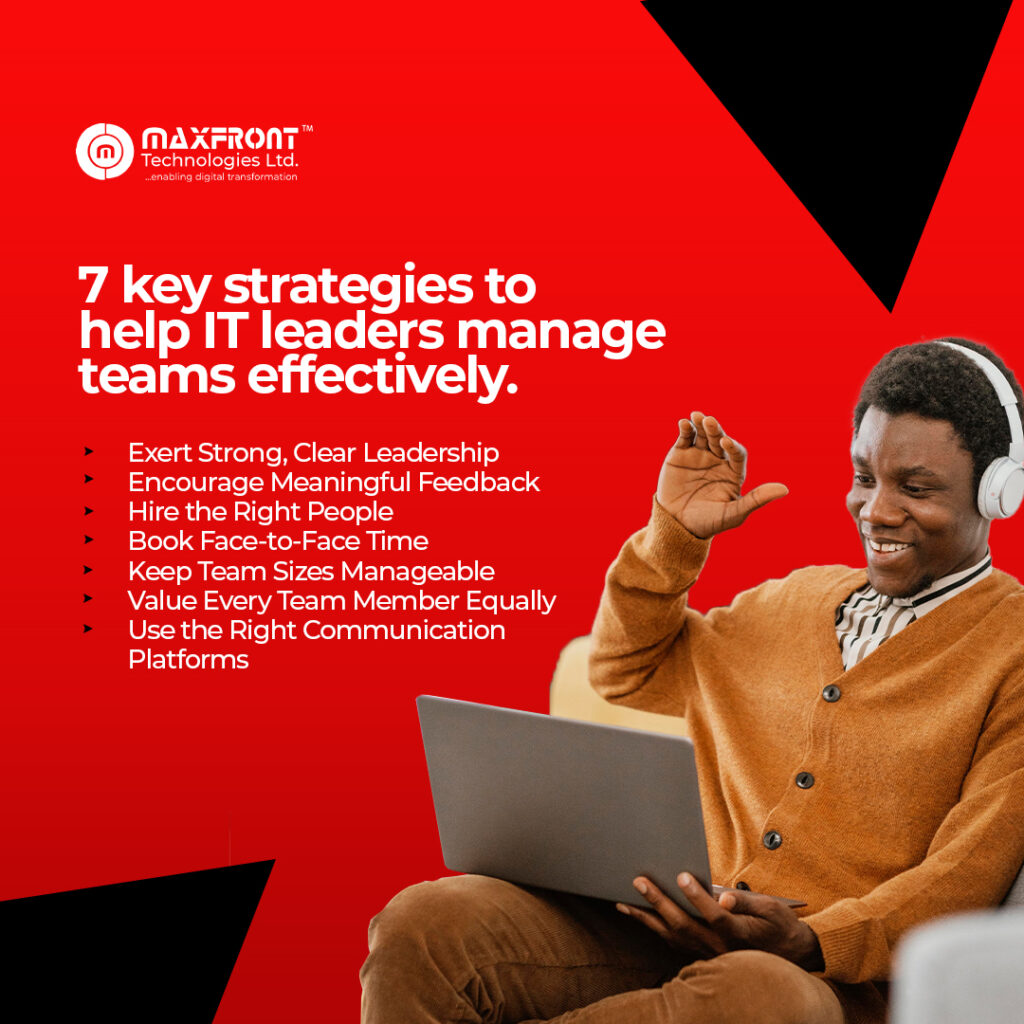
- Exert Strong, Clear Leadership
Remote teams thrive on clarity and direction. Effective leaders must establish well-defined goals, align expectations, and communicate the team’s objectives to ensure success. Without strong leadership, remote workers may feel disconnected or confused about their roles, leading to isolation, poor communication, and declining productivity.
Tip: Proactively identify potential goal conflicts, provide clear direction, and maintain open communication lines. Don’t assume silence means progress—engage your team regularly.
- Encourage Meaningful Feedback
Collaboration is a two-way street. While it’s important to give clear instructions, it’s equally important to listen. Remote workers might not always speak up when struggling, so it’s crucial to create a culture where feedback is welcomed and expected.
Tip: Hold daily or weekly check-ins via video calls. Ask open-ended questions like, “What’s working well?”, “How can I help?” or “Is there anything slowing you down?”
- Hire the Right People
Not everyone thrives in a remote work environment. Some people are more naturally suited to the autonomy, flexibility, and asynchronous nature of remote work. Successful remote employees tend to have strong time management skills, self-discipline, and high emotional intelligence.
Tip: During the hiring process, assess candidates’ ability to work independently, their comfort with virtual collaboration tools, and their adaptability to time-zone differences.
- Book Face-to-Face Time
Even the best remote collaboration tools can’t replace the human connection built during in-person meetings. Occasional face-to-face gatherings foster trust, enhance team morale, and promote a more profound understanding across cultural and professional boundaries.
Tip: Plan periodic retreats, on-site visits, or team bonding sessions—even if only once or twice a year. Celebrate wins together and build rapport beyond work-related tasks.
- Keep Team Sizes Manageable
The larger the team, the more challenging it becomes to maintain engagement and ensure effective collaboration, especially when working remotely. Smaller teams foster better communication, quicker decision-making, and increased accountability.
Tip: Structure large teams into smaller project-focused groups. Limit real-time meetings to essential attendees and use asynchronous updates for broader communication.
- Value Every Team Member Equally
Remote employees often feel overlooked, especially if part of the team works in the same location as the leader. Proximity bias—favouring those you physically see more—can lead to resentment and disengagement among remote staff.
Tip: Establish team norms together. Rotate meeting times to accommodate different time zones. Treat all contributions equally, regardless of location. Leaders must intentionally offer visibility and support to every team member.
- Use the Right Communication Platforms
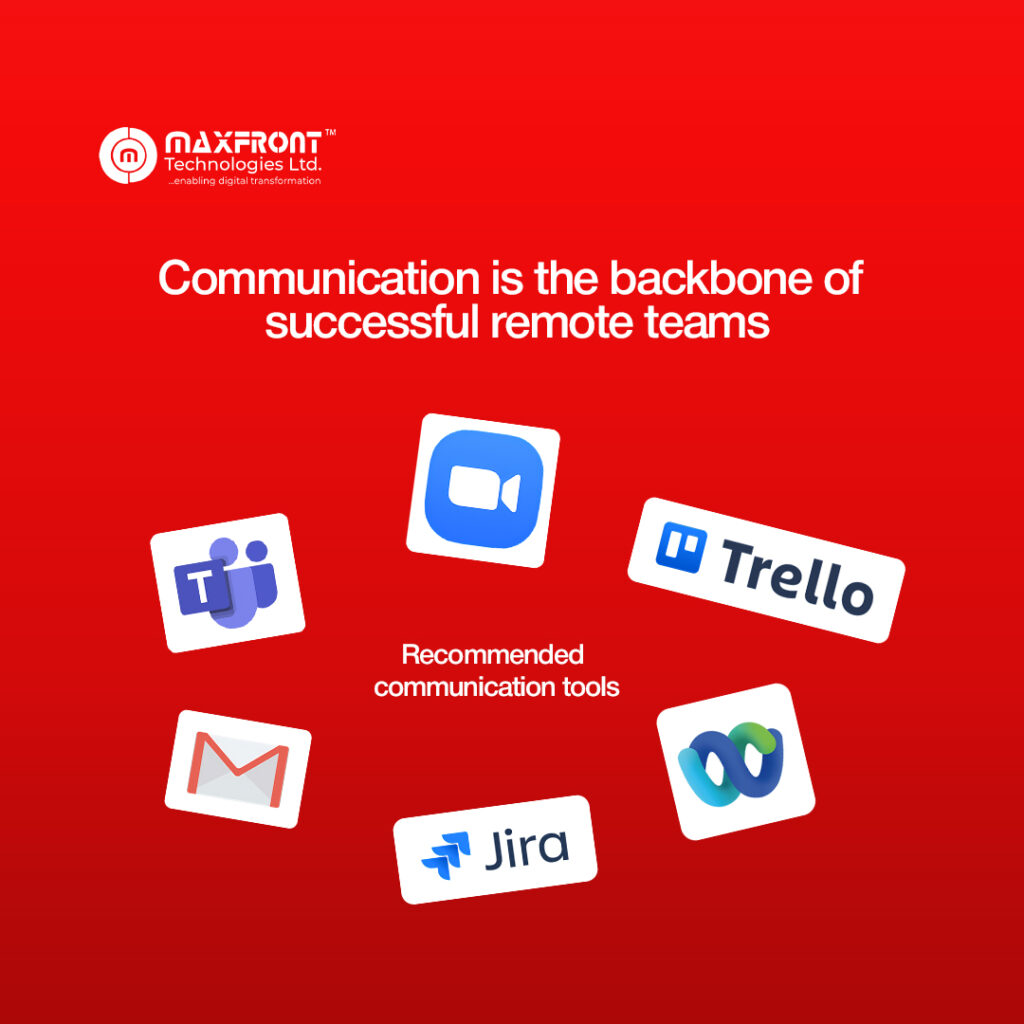
Communication is the backbone of successful remote teams. A combination of synchronous (real-time) and asynchronous (delayed) communication tools ensures that everyone stays informed and connected, without constant disruption.
Recommended Tools:
- Zoom / Webex: Video conferencing and whiteboarding
- Slack / Microsoft Teams: Instant messaging and collaboration
- Trello / Asana / Jira: Task and project management
- Email & Docs: Structured updates and documentation
Tip: Use video regularly to replicate face-to-face interaction. Encourage the use of collaborative documents and visual tools to enhance clarity and communication.
Final Thoughts
Leading a high-performing remote IT team isn’t about duplicating the in-office experience—it’s about reimagining teamwork for a digital world. With the right leadership strategies, thoughtful communication, and intentional team culture, remote teams can outperform even traditional in-person teams.
At Maxfront™ Technologies Ltd., we build secure, cloud-based platforms that enable organisations to manage remote processes, automate tasks, and keep dispersed teams aligned. Whether you’re managing a tech startup or a government agency, our solutions help you lead your team with clarity, efficiency, and confidence.
Let us help you build and manage better IT teams—wherever they are.
👉 Contact us today or visit www.maxfront.com to learn more.